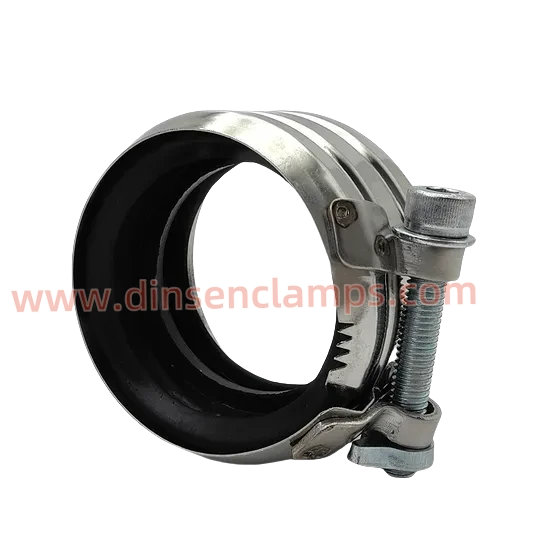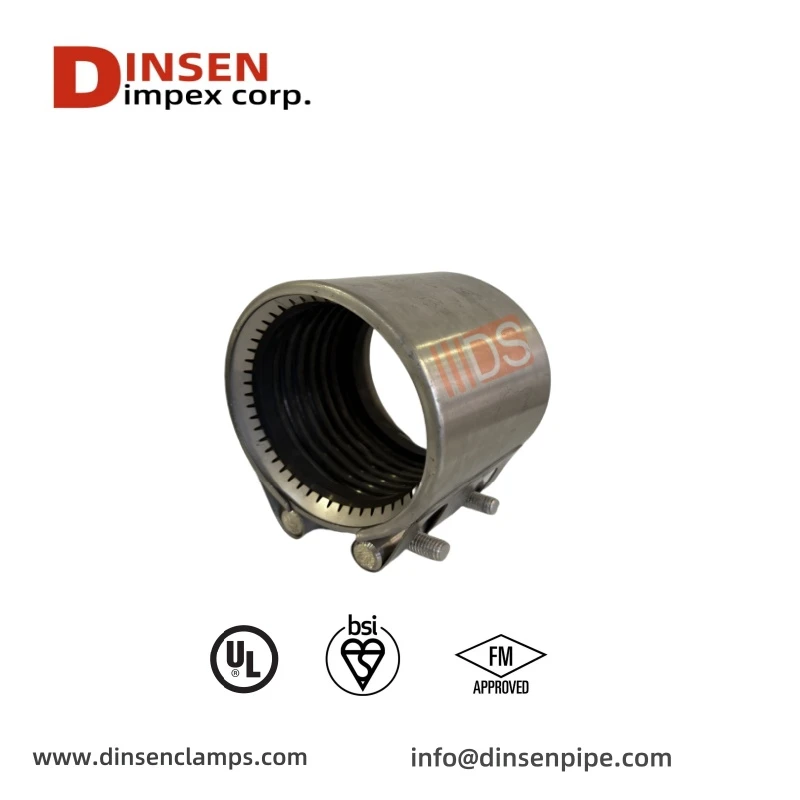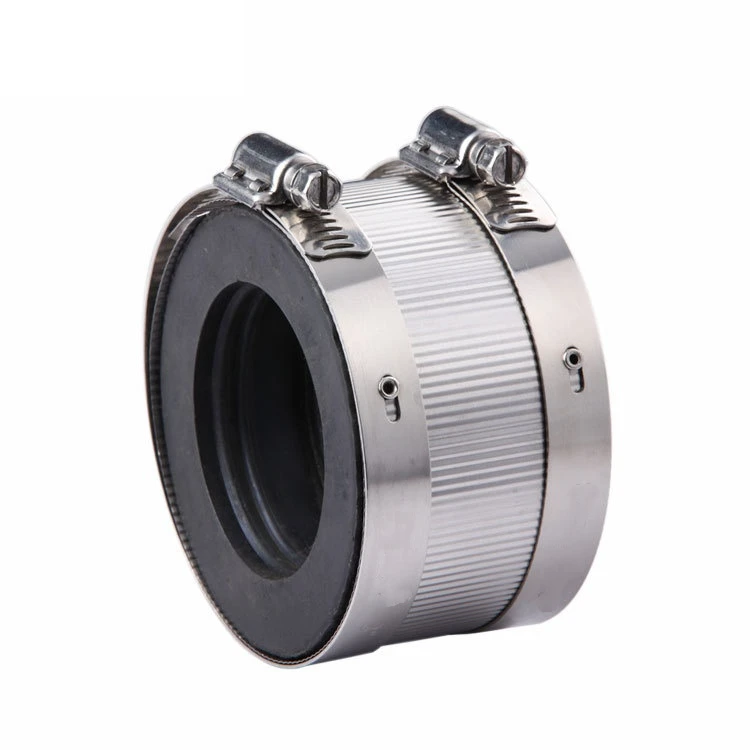
Torque Test of DINSEN Single Ear Clamp
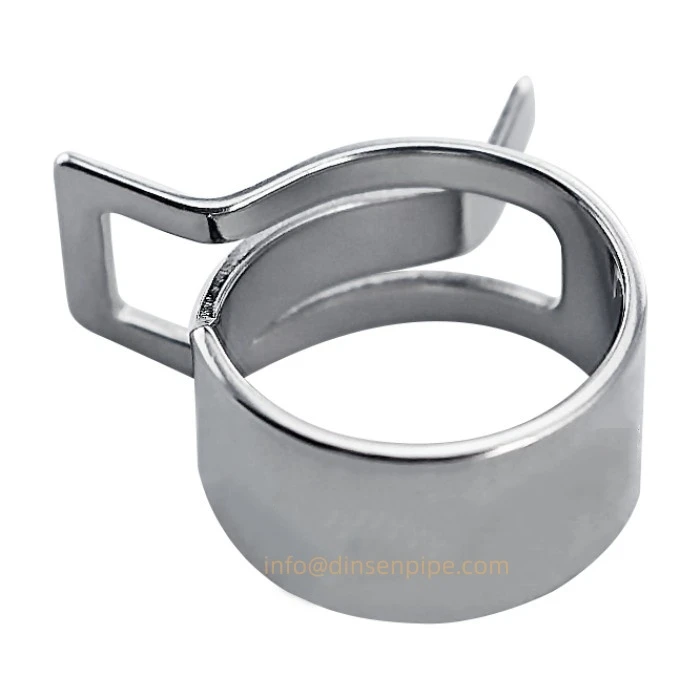
When you encounter a special single-ear clamp without screws, cross-cuts, and relying entirely on free-flowing circular arcs, traditional torque wrenches or destructive testing may no longer be applicable. So, how do you scientifically test the torque of such a clamp? How do you accurately determine its compliance? Today, using the DINSEN single-ear clamp as an example, we'll break down an efficient and reliable testing logic for you.
Traditional clamps often rely on screw tightening or mechanical cross-cut structures to provide clamping force; during testing, the torque wrench reading can be used directly. However, the DINSEN single-ear clamp uses a fully circular arc free-flowing design, is integrally molded, has no stress concentration points, and a smooth, continuous surface. The advantage of this design is that it will not damage the hose or sealing surface after installation and has extremely strong vibration resistance. However, the disadvantage is also obvious—the clamping force cannot be judged by the torque of a conventional screw.
Therefore, to determine its compliance, you shouldn't look at "how much force was applied," but rather "whether the product was damaged after clamping."
DINSEN Recommended Torque Testing(Practical Version)
For the structural characteristics of single-ear clamps, the DINSEN Quality Laboratory has developed a non-destructive clamping verification method, consisting of two steps:
1. Adjust the clamping force to the product standard
Use a high-precision pneumatic or hydraulic clamping testing machine.
First, adjust the machine's clamping force value to precisely set it to the value required for the corresponding DINSEN single-ear clamp specification (consult DINSEN quality engineer Vicent for specific values).
2. Perform clamping test on the product
Place the DINSEN single-ear clip to be tested onto the standard mandrel or the actual matching tubing.
Start the machine and perform a one-time clamping closure of the single ear.
If, during or after clamping, the clamp ear remains intact without cracks, the arc transition area shows no breaks, and the material surface is free of tears, it indicates that the clamp has a dense internal structure, uniform material, stable heat treatment process, and that the free arc transition design effectively eliminates stress concentration. Products meeting these criteria can be considered qualified.
DINSEN single-ear clamps, using more scientific standards to protect every connection you make. Contact us now to obtain DINSEN single-ear clamp samples and clamping force value comparison tables. Let every curve be a guarantee of safety.
-
DINSEN Pre-Shipment Quality Inspection for Hose ClampsTin tứcMay.19,2026
-
316 Marine Grade Hose Clamps for Boats: Solve Rust Problems with Salt Spray Test Report – China Factory DINSENTin tứcMay.13,2026
-
Who will Pay for CBAM 2026?Tin tứcMay.08,2026
-
Honoring Every Worker|DINSEN 2026 Labor Day Holiday NoticeTin tứcngày 30 tháng 4 năm 2026
-
Water Leaking at Home, Hose Slipping Off, Joint Dripping? Choose the Right Hose ClampsTin tứcApr.21,2026
-
How Can a Leaking DI Pipe be Repaired without Shutting it Off?Tin tứcApr.16,2026
-
What is the difference between 'Hose clamps' and 'Hose Clips'?Tin tứcApr.08,2026