What Is a Common Use for a Hose Clamp? 7 Real-World Applications
The most common use for a hose clamp is to fasten a flexible hose tightly onto a fitting, nipple, or pipe, forming a secure, leak-proof seal that keeps fluids and gases moving through a system under pressure. You will find this single job at work in a car radiator, a home water line, an industrial coolant loop, and a marine engine room. This guide explains where hoses and clamps are used, how to choose among small hose clamps, long hose clamps, and stainless steel hose clamps, and what the hose bolt actually does.
What Is a Hose Clamp? A 60-Second Definition
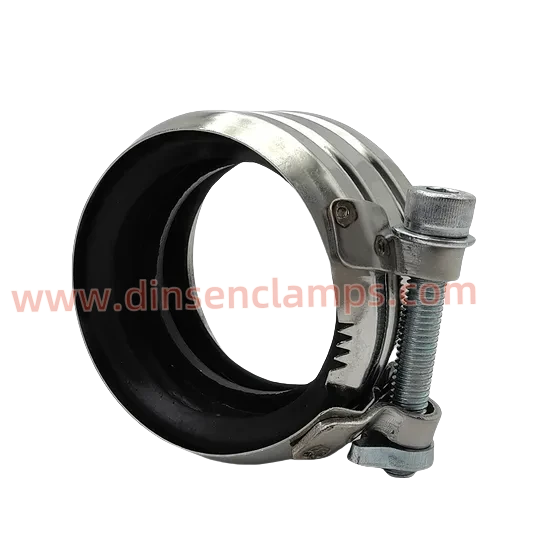
A hose clamp (also called a hose clip or band clamp) is a ring-shaped fastener that squeezes the end of a hose around a connector. Most clamp designs share 3 core parts:
- Band: a strip of steel, typically 9 mm or 12 mm wide, wrapped around the hose.
- Housing and screw: the tightening mechanism; turning the screw pulls the band smaller in diameter.
- Worm gear teeth: slotted holes in the band that the screw threads into, one tooth at a time.
The result is a controllable, reusable clamp. A quality band clamp can hold sealing forces from 5 Nm to over 15 Nm and withstand system pressures of 10 to 30 bar, depending on size and material.
The #1 Common Use: Clamps for Coolant Hose in Cars and Trucks
The single most visible common use is sealing a coolant hose on a vehicle. An engine cooling system circulates antifreeze at roughly 85°C to 105°C and 1 to 2 bar of pressure. If a connection loosens by even 1 mm, coolant leaks, the engine overheats, and a repair that should cost a few dollars can turn into a four-figure failure.
That is why original-equipment manufacturers specify clamps don coolant tiyo at nearly every junction: radiator top and bottom hoses, heater core hoses, thermostat housings, and water pump outlets. A typical passenger car uses between 8 and 14 individual clamps in its cooling circuit alone. Because this is the highest-volume application, coolant clamps are the most requested item in the hoses and clamps category worldwide.
6 Other Common Uses of Hoses and Clamps
Beyond cooling systems, hoses and clamps secure fluid and gas lines in these 6 settings:
- Plumbing and water supply: fixing braided hoses to taps, toilets, and water heaters.
- Industrial fluid transfer: sealing chemical, oil, and air lines on pumps and tanks.
- HVAC and refrigeration: holding refrigerant and condensate lines on coils and compressors.
- Marine and boating: securing bilge, fuel, and raw-water hoses exposed to salt spray.
- Agriculture and irrigation: connecting 25 mm to 110 mm water lines on pumps and sprayers.
- Turbo and intake systems: clamping boosted air hoses that see 20 to 30 psi of pressure.
Each setting changes the demands on the clamp: diameter, corrosion resistance, and tightening torque all vary.
Choosing by Size: Small Hose Clamps vs. Long Hose Clamps
Size is the first filter. Manufacturers group clamps by the hose outer diameter they fit. The table below shows 6 common size bands and the torque typically applied:
Hose OD (mm) | Clamp Range (mm) | Band Width (mm) | Typical Torque (Nm) |
6–12 | 8–12 | 9 | 2.5 |
12–22 | 12–22 | 9 | 3.5 |
20–32 | 20–32 | 12 | 5.0 |
32–50 | 32–50 | 12 | 6.5 |
50–70 | 50–70 | 12 | 8.0 |
70–90 | 70–90 | 14 | 10.0 |
Small hose clamps generally cover 6 mm to 25 mm hoses. They are used on fuel lines, sensor hoses, and laboratory tubing where space is tight and torque must stay low (2.5 to 4 Nm) to avoid cutting a soft wall.
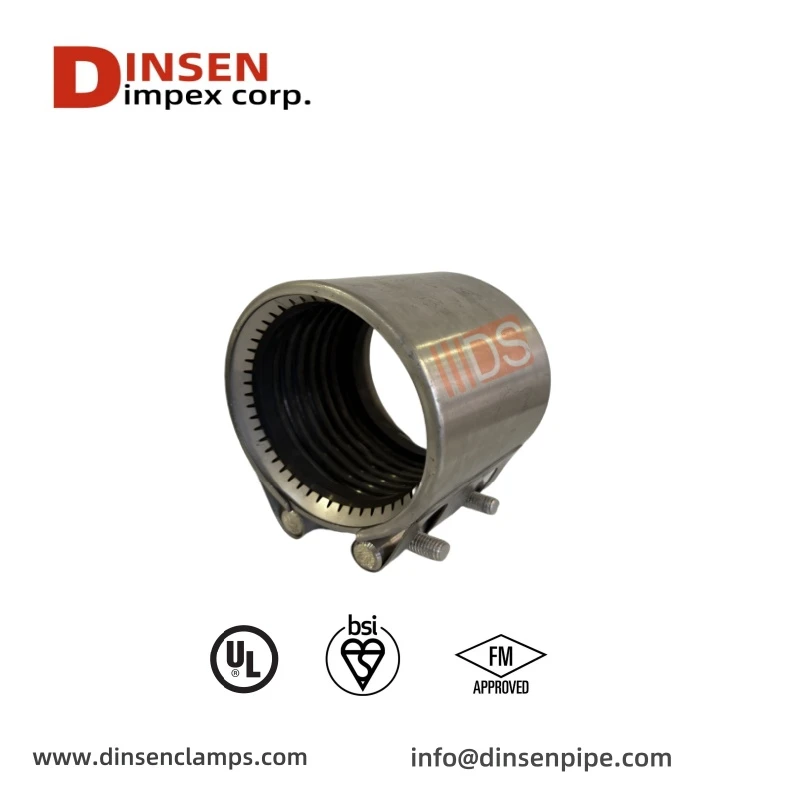
Long hose clamps are not defined by a single diameter but by extended band length, which lets one clamp wrap large or irregular ducts from 80 mm up to 300 mm or more. They are common on HVAC ducting, agricultural suction hoses, and dust collection systems. Choosing the wrong size is the top cause of clamp failure, so measure the hose outside diameter before ordering.
Why Material Matters: Bakin Karfe Hose Clamps
The second filter is corrosion resistance. Under the DIN 3017 standard, worm-drive clamps are graded W1 through W5 by which parts are stainless:
Grade | Band | Screw | Gidaje | Best For |
W1 | Zinc steel | Zinc steel | Zinc steel | Dry indoor, general use |
W2 | Stainless | Zinc steel | Zinc steel | Mild moisture |
W3 | Zinc steel | Stainless | Stainless | Cost-sensitive outdoor |
W4 | 304 stainless | 304 stainless | 304 stainless | Coolant, marine, food |
W5 | 316 stainless | 316 stainless | 316 stainless | Saltwater, chemical |
Stainless steel hose clamps (W4 and W5) resist rust because chromium in the steel forms a thin oxide film. Grade 304 contains roughly 18% chromium and 8% nickel; grade 316 adds about 2% molybdenum for superior pitting resistance. For a coolant hose or any wet, outdoor, or coastal application, W4 or W5 is the safe specification.
Understanding the Hose Bolt: Worm Drive vs. T-Bolt
The hose bolt is the threaded fastener that generates clamping force. Its design decides how much pressure the assembly can hold:
- Worm-drive screw: the most common type. A slotted band and a rotating screw give smooth adjustment across a wide size range. Typical torque is 3 to 10 Nm.
- T-bolt clamp: a solid band with a T-shaped bolt and a bridging nut. It delivers even pressure around the full circumference, holding 15 Nm or more and suiting hoses above 50 mm or high-boost turbo lines.
- Spring clamp: a pre-tensioned ring for low-pressure, small-diameter jobs; no tool needed, but fixed force.
If a joint sees vibration, a worm-drive hose bolt with a liner is usually preferred; if it sees high pressure on a large hose, a T-bolt design is stronger.
How to Choose the Right Clamp: A 5-Step Checklist
Follow these 5 steps to specify a clamp correctly:
- Measure the hose outside diameter in millimetres.
- Pick a clamp whose range brackets that diameter, leaving 2–3 mm of adjustment.
- Match the material grade to the environment (W1 dry, W4 wet, W5 salt).
- Confirm the torque rating against the hose manufacturer's limit.
- Check the band width: 9 mm for small hoses, 12–14 mm for large ones.
Installation Best Practices
Proper installation matters as much as the part itself:
- Position the clamp 3–5 mm from the end of the hose, fully over the fitting's sealing bead.
- Tighten evenly with a torque-limiting screwdriver to the specified value (see the size table above).
- Never exceed the hose rating: over-tightening cuts soft rubber and causes more leaks than under-tightening.
- After the first heat cycle, re-check torque once; thermal expansion can loosen a new clamp by 5–10%.
Frequently Asked Questions
1. What is the most common use of a hose clamp?
To seal a hose to a fitting and prevent leaks in fluid or gas systems, most commonly on vehicle coolant hoses.
2. Can I reuse a hose clamp?
A stainless steel hose clamp can usually be reused 2–3 times if the band is not deformed and the screw threads are intact.
3. What size clamp do I need for a 25 mm hose?
A clamp with a range near 20–32 mm, tightened to about 5 Nm.
4. stainless steel hose clamps better?
For wet or corrosive settings, yes: W4 and W5 resist rust far longer than zinc-plated W1 clamps.
5. What is a hose bolt?
The threaded screw or bolt that tightens the band; worm-drive and T-bolt are the two main types.
6. How tight should a coolant hose clamp be?
Typically 3.5–6 Nm for passenger-car hoses; follow the hose maker's rating to avoid damage.
Me yasa Zabi DINSEN Hose Clamps
DINSEN is a supplier of hose clamps and pipe coupling products, serving customers in more than 50 countries. Our range covers small hose clamps, long hose clamps, worm-drive and T-bolt stainless steel hose clamps, all produced under ISO 9001 quality management and dimensioned to DIN 3017.
- Full size range: 8 mm to 300 mm, including hard-to-find long hose clamps.
- Verified materials: 304 and 316 stainless options with traceable material grades.
- Consistent torque: every band is tested to meet its rated clamping force.
- Export experience: 50+ countries across Europe, the Middle East, and Southeast Asia.
Engineers, distributors, and plumbing contractors specify DINSEN when they need hose clamps that arrive on spec and stay sealed.
Ready to Source Hose Clamps? Get a Quote Today
Tell us your hose diameter, quantity, and material grade, and our team will recommend the exact clamp and send a free sample for testing. Visit www.dinsenclamps.com to browse the full catalogue or contact our sales team for a same-day quotation. Request your free sample and quote now.
-
Rubber Gasket Materials for Pipe Couplings: EPDM, NBR, FKM and TPE ComparedLabaraiNov.05,2026
-
Stainless Steel Hose Clamp Installation Guide: Avoid LeaksLabaraiNov.04,2026
-
Day 4 at the 140th Canton FairLabaraiOct.26,2026
-
What Is a Characteristic of a Pipe Clamp? Key Features, Types & Buying GuideLabaraiOct.21,2026
-
Celebring China's National Day — Warmest Greetings from DINSENLabaraiOct.08,2026
-
Our Office Will Pause for the National Day WeekLabaraiSep.28,2026
-
Are Hose Clamps Stainless SteelLabaraiSep.22,2026