
Spring Clamp Square Test
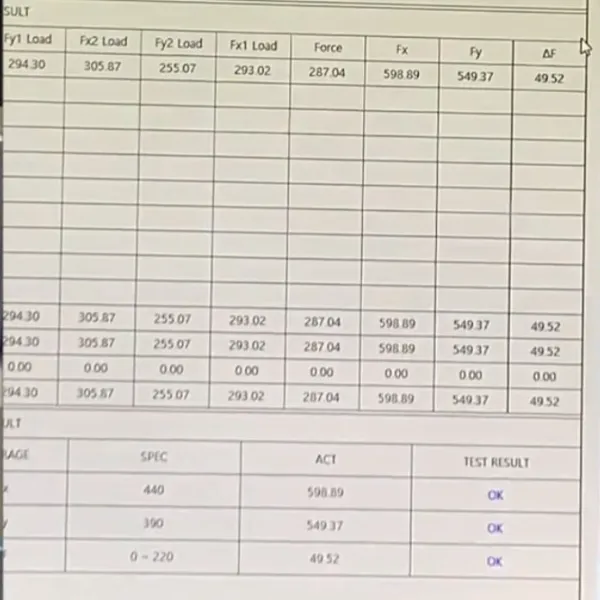
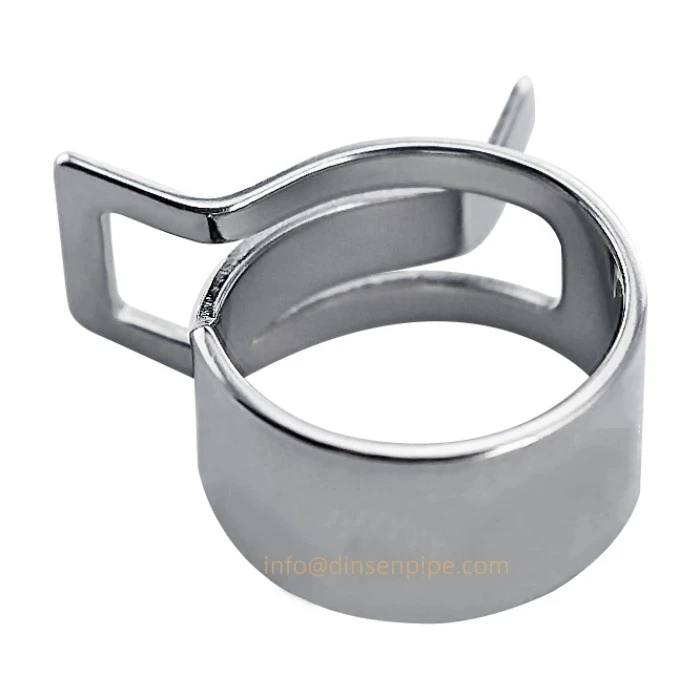
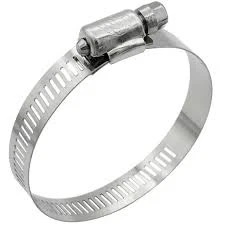
The "Four-Directional Test" is a standardized testing method specifically designed to evaluate the performance of klem selang spring under extreme, uneven load conditions. It simulates the most severe operating conditions a clamp might encounter in real-world applications—specifically, situations where the two connected components (such as water pipes, oil pipes, or turbocharger lines) are not on the same axis, exhibiting "misalignment."
This test examines the clamp's resistance to deformation, its stability in maintaining a constant clamping force, and its structural integrity by applying loads sequentially in four directions (up, down, left, and right). It is one of the key indicators of a spring clamp's quality.
Core Objective: To verify whether a spring clamp can maintain its sealing function without permanent deformation or failure under asymmetrical radial forces.
Importance: Simulating Real-World Challenges: In complex environments such as automotive engine compartments and industrial equipment, due to vibration, thermal expansion and contraction, and installation tolerances, it is difficult to guarantee 100% concentricity between connected hoses and rigid pipes. This misalignment will generate uneven stress on the clamp.
Beyond Conventional Torque Testing: Ordinary torque-tension tests can only measure the clamping force under ideal conditions. The four-way test examines the clamp's "survival ability" under "bad" operating conditions.
Preventing Early Failure: A clamp that fails the four-way test is prone to the following under harsh operating conditions:
* Permanent Opening/Loosening: Leading to a decrease in clamping force and causing leakage of media (coolant, engine oil, air).
* Fracture: Directly causing connection failure, potentially leading to serious equipment failure or safety accidents.
* Ear Deformation: Making subsequent disassembly and reinstallation difficult or even impossible.
The core criterion for evaluating test results is the permanent deformation of the hose clamps. Key Indicator: Gap Change ΔG = |Gap B - Gap A|
Acceptable Standards (Industry Standard):
Excellent/High Standard: ΔG ≤ 0.1 mm
Good/Acceptable: ΔG ≤ 0.2 mm
Unacceptable: ΔG > 0.2 mm
Kontak DEN to obtain the complete experimental report.
-
How Can a Leaking DI Pipe be Repaired without Shutting it Off?KabarApr.16,2026
-
What is the difference between 'Hose clamps' and 'Hose Clips'?KabarApr.08,2026
-
DINSEN Powers Global Debut with Two Major Exhibitions – Strong Market EntryKabarApr.02,2026
-
Best Suppliers of EPDM Rubber Gaskets Compliant with EN681KabarApr.01,2026
-
Will Stainless Steel Pipe Clamps React with Copper PipesKabarMar.30,2026
-
What Metal is Used for Pipes in Plumbing in HousesKabarMar.25,2026
-
Saudi Aramco cuts oil supply to Asia Amid Strait of Hormuz TensionsKabarMar.23,2026
 Javanese
  English
  Arabic
  Bengali
  Bosnian
  China
China  Danish
  Dutch
Dutch  French
  German
  Hausa
Hausa  Hindi
Hindi  Italian
  Japanese
  Malay
Malay  Portuguese
  Russian
  Spanish
  Urdu
Urdu  Vietnamese